
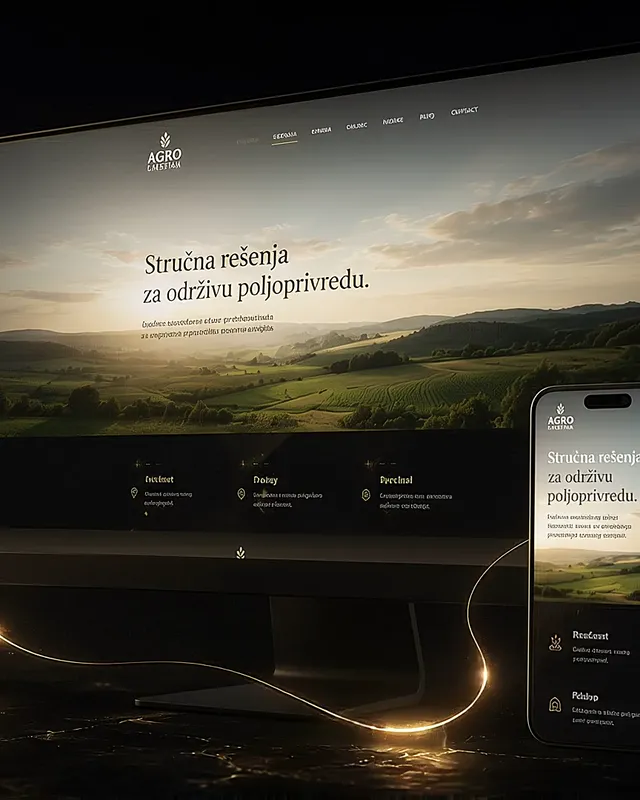
A website isn’t decoration.
It’s where people call you from.
Someone has found you on their phone, on a bus. They have thirty seconds. In that time the site has to say what you do, whether you work in their area and where to press to reach you.
- A fixed agreement before we start
- Designed for the phone first
- Our work is at live addresses
Websites for tradespeople, dentists, lawyers, photographers, restaurants, salons, bakers and accountants — so they find you and call.
A website isn’t decoration — it has to do a job.
That job has four steps, and they always run in this order. If any one of them fails, there is no phone call — no matter how good the site looks.
This is what it looks like when a site starts working.
SOVA has been working in pest and sanitary control since 1990. The business was the same before and after — what changed was how quickly a customer grasps what they do and how to call them.
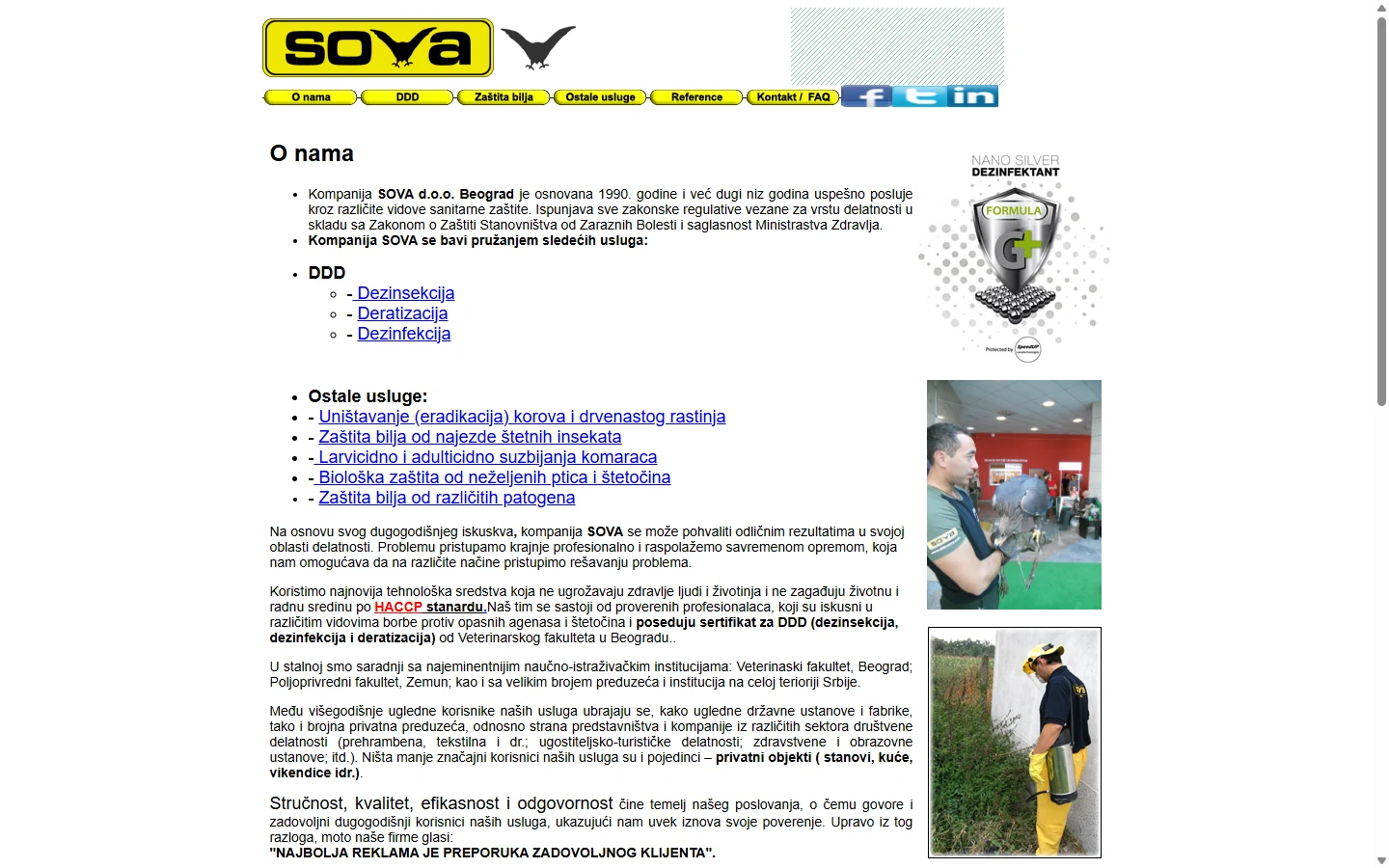
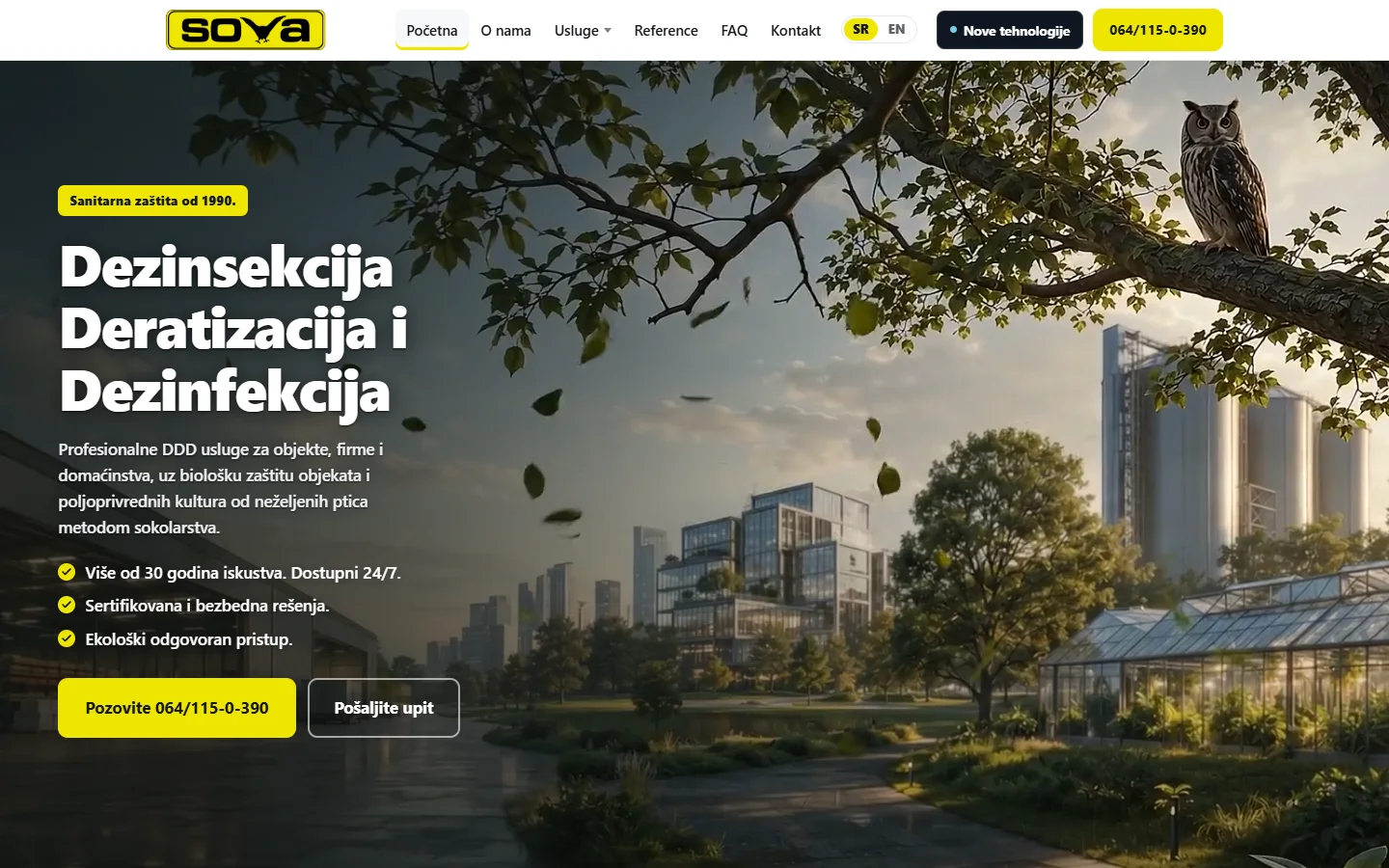
What actually changed: the service moved up into the headline, the three things a customer cares about now sit above the fold, and the phone number became the main button instead of a menu item.
That is how much the opening video was cut down on the site of expert witness Dejan Milovanović — the same footage, the same impression, and eight times less data for a phone to download.
We do not promise first place on Google, a guaranteed number of clients, or revenue. What we promise is a clear route: better structure, clearer pages and a tidy Google profile raise the chance that people already looking for that service find you — and understand why they should call you rather than someone else.
From a search to an enquiry.
This is the route a good website walks someone along — step by step. No invented numbers, just the logic we build into every site.
-
01 / Google and the map
The customer finds you
It all starts with a search: “rubber stamps Belgrade”, “pest control price”, “photographer Novi Sad”. A tidy Google profile and the right page put you where the customer is already looking — without paid advertising as the only way in.
-
02 / The right page
They land where they should
Not on a home page that talks about everything, but on the page that answers exactly what they searched for.
-
03 / Proof
They believe you’re real
Real photographs, specific services, the area you cover and the company’s details — proof that there are people behind the site.
-
04 / A clear offer
They understand what they get
What’s included, what isn’t, and how the price is arrived at — no guesswork and no “contact us for everything”.
-
05 / The button and the form
There’s something to click
One clear next step, the same on every page: call, message, or send an enquiry.
None of these steps is magic. Each one is a concrete decision in the design and the copy — which words, which page, which button. When all of them work together, a visitor doesn’t give up halfway. The first step works hand in hand with the Google Business Profile and local SEO.
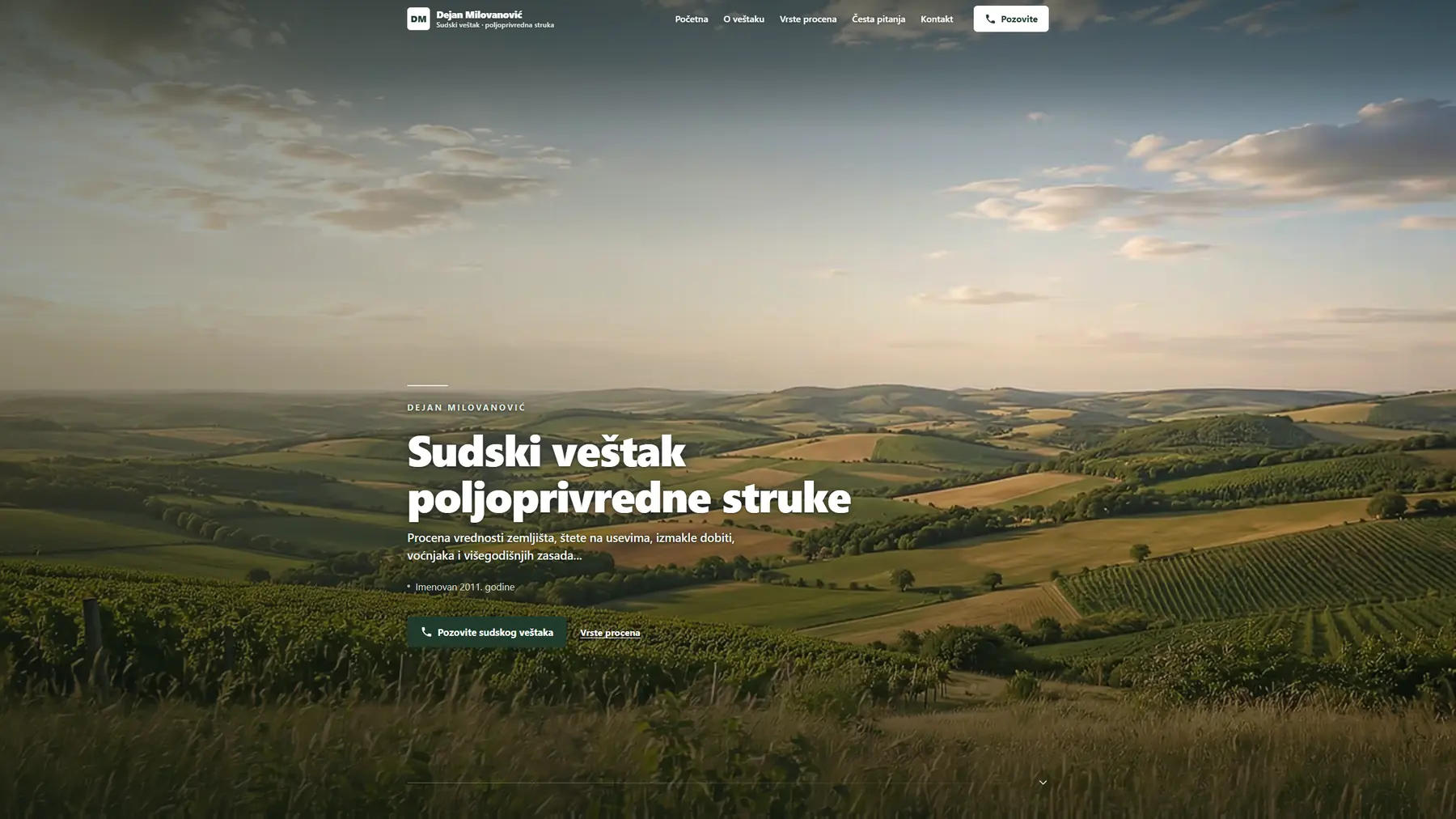
What it looks like when it’s finished.
A court expert witness in agriculture — a redesign of a site that had stopped in time. A new structure, clearer types of assessment, official credentials brought forward, and a mobile view that finally works.
- −87% hero video. From ≈7.69 MB down to ≈1.01 MB, same footage.
- 0 console errors. And 0 broken assets in the delivered version.
- 320–1920 px. Every tested width, with no horizontal scrolling.
The figures come from QA testing on that version of the site — measured, not estimated. We don’t promise the same result on every project.
Four businesses, four different jobs to do.
The same build standard, a different job for each site to do. The screenshots are real; the status of each project is stated next to it.
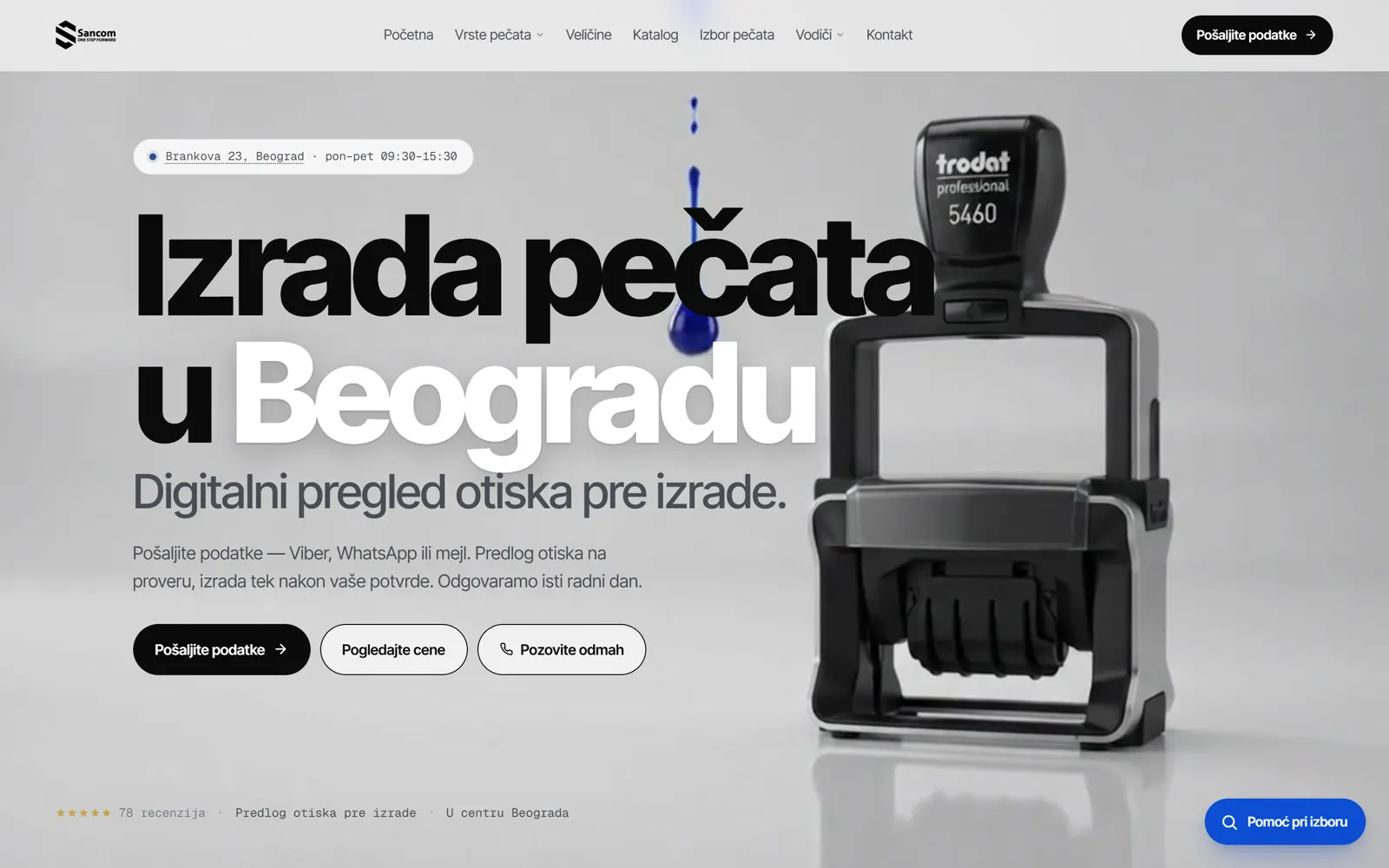
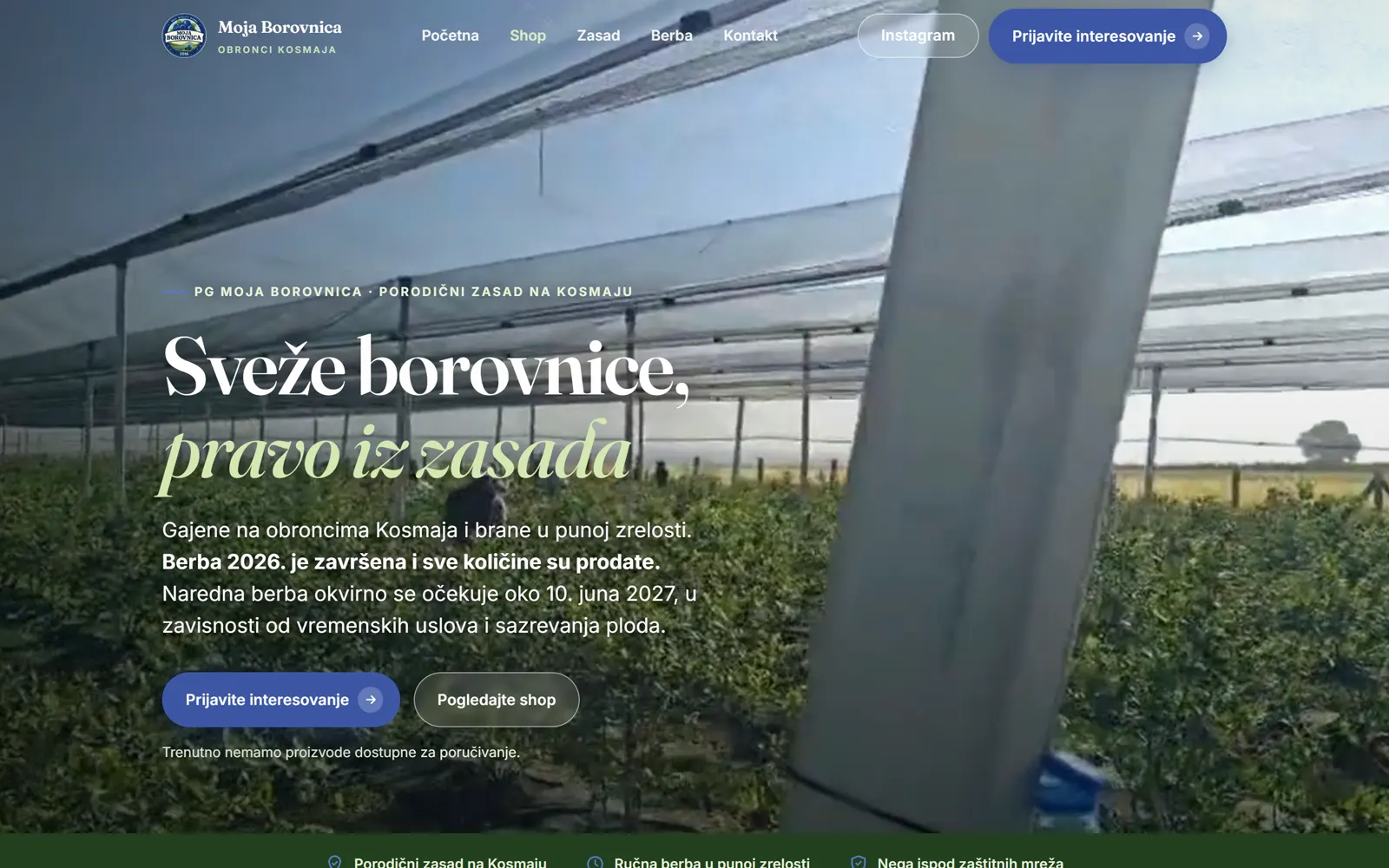
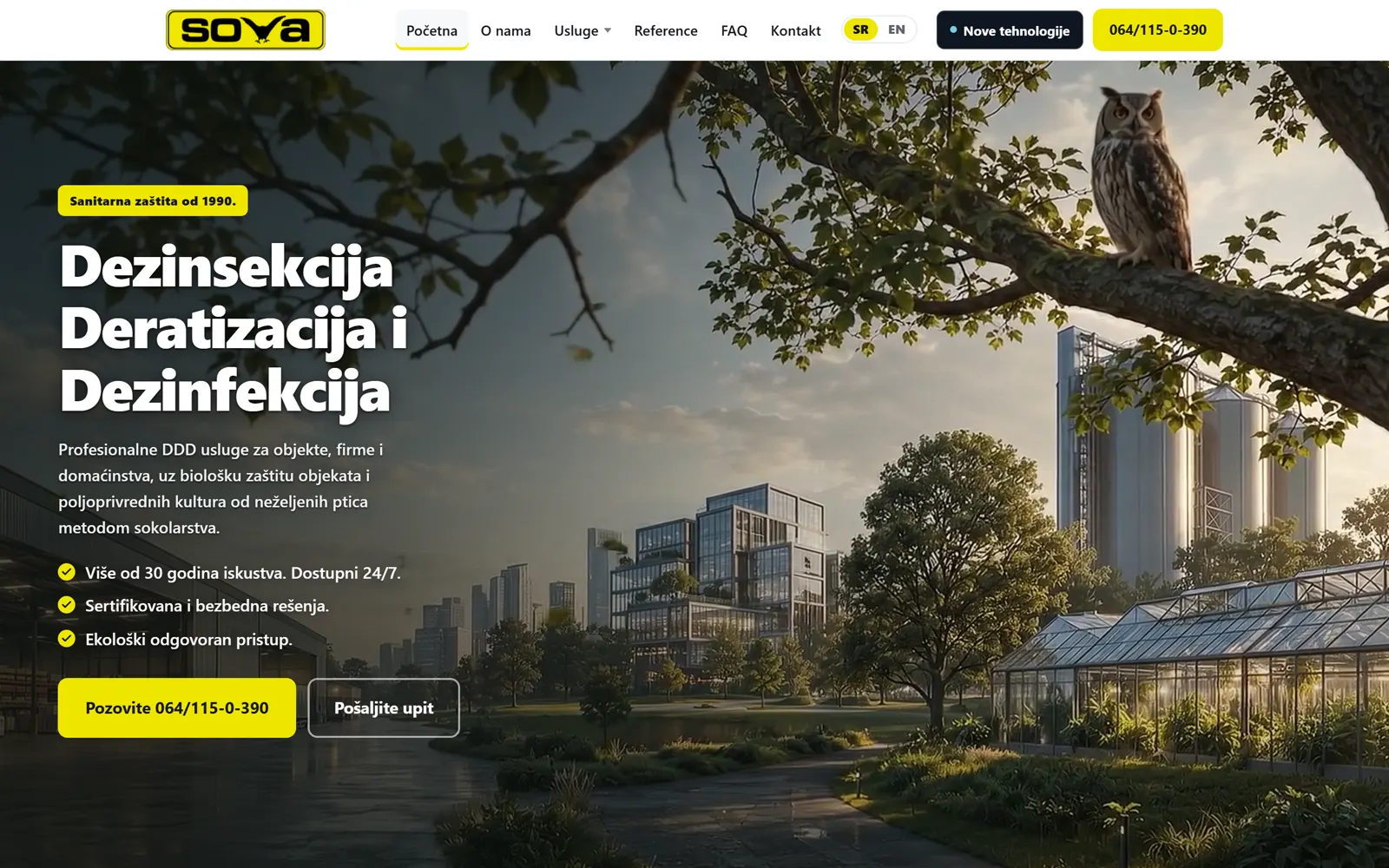

Not every business needs the same website.
A local tradesperson needs a clear site that puts them in front of a customer and leads to a call. A brand, or a company with several services, needs more — an original design, more pages, content that holds together. We do both, and we’ll tell you honestly which one is enough for you.
For when you need to be found, understood and called — with nothing surplus. One to a few pages, phone first, with a clear call to action.
- One to a few pages, phone first
- Structure, copy polishing and design for your business
- Prepared for search — the technical SEO basics
- A clear route to contact: form, phone, WhatsApp
- Checking and going live
- Two consolidated rounds of revisions
It’s enough when: you offer a clear service, the goal is to be found and called, and you don’t need a large content system.
Not included: setting up and sorting out the Google Business Profile — that is the “Find me” package (€900). If your profile is already in good shape, €600 may well be enough.
All packages and pricesFor a brand, or a company with several services, that wants to present itself more broadly and more seriously.
- Original art direction and visual concept
- Several page types and custom components
- Animation and motion that serve a purpose
- Photo and video work, a larger body of content
- Content architecture and an SEO plan before the build
- Advanced forms, integrations, analytics and deeper QA
It makes sense when: you have several services, a more serious brand that needs its own design, or content and components that need organising at a higher level.
Let’s talk about scopeNot sure which one you need? Tell us in two sentences what you do — we’ll say honestly whether a business site is enough or whether premium makes sense. If you don’t need premium, we’ll say that too.
A note: a more complex bespoke site is usually €1,500–3,000. That is a range, not a fixed price — the final figure depends on the scope we agree together. A shop, bookings, a portal or an application are quoted separately against scope, with no public price.
Google has to understand the site.
That gets planned before any code.
Google doesn’t read design. It reads what is written, in what order, and which page answers which question. If that isn’t sorted before the build, fixing it afterwards is expensive — and never quite complete.
So before the first line of code we decide which pages exist, which heading carries which message and where the town and the trade are named — and only then do we write clean HTML that opens quickly on a phone.
If it’s part of the agreement, the site is connected to the Google Business Profile so the details match in both places.
Alongside the site we also run a pilot AI assistant that answers visitors’ common questions. It is not part of every website and it is not a finished service — here is what the pilot actually does.
From agreement to launch — five steps.
No long meetings and no fog. At any moment you know where we are and what comes next.
Who your customers are and where you’re losing them now. We agree the scope, the fixed price, and what you prepare versus what we do.
We lay out the pages, the order and the call to action. This is also where what Google needs to understand gets settled — before anything is coded.
We build the site with the copy and the images, phone first. You see progress and give feedback as we go.
We refine until it sits right.
Two consolidated rounds of revisions are included in the priceEverything goes live, with a technical check on phone and desktop, the Google basics, and a short handover — so you know what you have and what comes next.
How we make the decisions behind a website.
The important part is above. Here are a few things in more detail — open only what you need.
How we choose a site’s structure+
We start from your services and the questions customers ask most. Then we arrange the pages and their order so a visitor gets from “who are you and what do you do” to “how do I call you” without stalling. Fewer pages that clearly do their job are worth more than many pages that overlap.
What exactly we mean by technical SEO+
Fast rendering, clean semantic HTML, tidy titles and descriptions for search, correct display on a phone, and schema where it genuinely describes what is on the page. No tricks and no invisible text.
When a premium build makes sense+
When you have several services or page types, a more serious brand that needs its own design, more content to organise, or particular pieces such as advanced forms and integrations. If a clear business site is enough for you, we’ll say so — there is no sense in paying for scope you don’t need.
“The site that gets found”
A site with a clear structure, fast and built for the phone, prepared for search, with two rounds of revisions. The Google profile is a separate job. A fixed price — you know in advance what you’re getting.
All packages and pricesShort answers
What does building a website cost?
For the standard packages the price is fixed and published in advance — see the Pricing page. For anything outside those bounds you get a written estimate before anything starts.
What moves the price is not the number of pages but the amount of work: how much has to be written and photographed, how many services are shown, whether there is selling involved, how many languages, and whether it connects to something you already use.
How long does building a website take?
The deadline is fixed in the written quote, before work starts — and from that moment it binds us.
We don’t publish one figure for everyone, because it would be wrong: the same package takes different amounts of time depending on whether the copy and photographs already exist or still have to be made. The most common cause of delay isn’t development but waiting for material, so we send you the list of what’s needed right at the start.
What do I have to prepare?
Accurate basic details, a list of services, your photographs, and one person who makes the decisions. You don’t have to write the copy yourself — raw material is enough, the rest is our job.
If you have an old site, a domain or hosting, we need access or at least to know who holds it. That is the single most common place where projects stall.
Does the site work on a phone?
Yes — the site is built for the phone first and then widened to larger screens. Most local searches come from a phone anyway.
In practice that means the phone number and the message button are within thumb’s reach, the text is readable without zooming, and the page opens even on a weak connection.
What happens after launch?
The site is yours, with all the access details. Maintenance is optional and comes in six levels with fixed monthly prices — it is not a condition of the site working.
What isn’t maintained quietly decays: certificates and domains expire, details go stale, forms stop working. Better to know in advance who is watching for that — and whether it’s you.
What people ask us most.
How long does building a website take?+
It depends on the scope and on how quickly the material arrives. We agree the exact deadline before we start — and we keep to it, because it is part of the fixed agreement.
What do I need to prepare?+
The basic details of the business, photographs if you have them, and a couple of sentences about what you offer. If there is no copy, we write it together.
Is the site mine — domain, hosting, email?+
Yes. The domain is registered in your name, and you receive the access details at the end of the project. Who should own what — the site, the domain, the hosting and the email — is something we go through with you before anything is registered.
Are the domain and hosting included in the package price?+
No. The package price is the price of the build. The domain (your address) and the hosting (the space the site lives in) are a separate, small annual cost that you pay and that is registered in your name. We help with choosing and setting them up, and we tell you the exact amount before you order anything. More detail on the Pricing page.
What if I already have a domain?+
Then we use the one you have — nothing new is bought and your address doesn’t change. We just need access to the domain settings, or for you to make the change at your registrar following our instructions. The domain stays in your name. The same applies if you already have hosting: we look at what it is first, then tell you whether it’s good enough.
What do I keep when the job is finished?+
The site, the domain and the hosting accounts are in your name and stay yours. The content you give us and the material we produce for you are yours too. At the end of the project we hand over the access details — nothing has to be bought back and there is no step at which something stays locked with us. If you also have a Google Business Profile, that stays on your account as well.
What happens after launch?+
The site can live without us. If you want someone keeping an eye on changes, security and small refinements, maintenance exists as a separate, clearly defined service.
I have a site — what happens to the existing page addresses after a redesign?+
In a redesign, important page addresses are kept wherever possible, so your existing links and rankings don’t fall away. Where the structure has to change, the old address gets a permanent redirect to the new one — so an old link still takes a person where they meant to go. What exactly is kept and what is redirected is agreed before we start, not after.
How does premium differ from a standard site?+
The difference is scope and ambition: an original design, more page types, more advanced motion and forms, deeper SEO and a content system. A standard site solves being found and called; premium carries a more serious brand and more content.
What does the €1,500–3,000 range mean for a bespoke site?+
That is the range a more complex bespoke site usually falls into. We agree the exact price and scope after a short brief. E-commerce, applications and larger systems are quoted separately against scope.
Do I have to pay a monthly contract after the build?+
You don’t have to. We do maintenance as and when it’s needed and agreed — it is not a compulsory subscription.
Can I extend the site later?+
Yes. We build the structure so new pages and sections can be added easily when you need them.
Does the site work well on a phone?+
Yes, and it comes first. We build for the phone first, because that is how most people look, and only then check the desktop.
Three pages worth reading first.
The explanation, the proof and the price — in that order.
Tell us what you do.
You’ll get a clear proposal and a price.
A couple of sentences about the job is enough — no obligation.